Boiler Cleaning and Maintenance: The Complete Guide to Fire-Side and Water-Side Care

Keeping a marine or industrial boiler running safely and efficiently isn't just about firing it up and watching the pressure gauge. It's about disciplined, scheduled maintenance of both the fire side and the water side because neglecting either one can shorten a boiler's life, waste fuel, or worse, cause a dangerous failure.
Our blog will guide you through why boiler cleaning matters, how the fire side (smoke tubes, furnace, refractory) and water side (drums, tubes, scale) are inspected and cleaned, common repair techniques like tube plugging, and the role of refractory brickwork in protecting the whole system.
Why Boiler Cleaning Matters
A boiler is essentially a heat-exchange machine. On one side, hot combustion gases pass through or around tubes; on the other, water absorbs that heat to make steam. Anything that coats those heat-transfer surfaces soot on the fire side, or scale and sludge on the water side it acts as insulation.
That insulation forces the boiler to burn more fuel to produce the same amount of steam, and in severe cases it allows metal surfaces to overheat, weaken, and fail.
Regular cleaning and inspection protect three things at once: fuel efficiency, equipment longevity, and operator safety.
Cleaning the Fire Side of a Boiler

The fire side refers to everything exposed to combustion gases: the furnace, combustion chamber, smoke tubes, and the tube banks that carry hot gas toward the funnel or stack. Over time, soot and, in some cases, hard scale deposits build up on these surfaces.
The Old Way: Manual Brushing

Historically, tube cleaning was a brutal manual job. Long, heavy rods with brushes fastened to the end were pushed and pulled through soot-laden tubes by hand, filling the boiler room with clouds of soot. This wasn't just messy, it was hazardous. In the 1970s, the discovery of vanadium poisoning, an influenza-like illness with potentially permanent effects, was linked to workers breathing air with airborne vanadium concentrations as low as 5 mg per cubic meter. That discovery pushed the industry toward safer, mechanized alternatives.
Modern Mechanical Tube Cleaning

Today's tube-cleaning equipment removes most of the manual labor and exposure risk:
Motor-driven brushes and scrapers are mechanically fed through the tubes, connected to powerful vacuum systems that pull loosened soot away as it's dislodged keeping the tube bank, boiler room, and operator clean.
Rotary tube cleaning systems handle tougher scale deposits, which are common in waste-heat boilers or units burning lower-quality fuel, where simple brushing isn't enough.
Flexible-shaft air motor systems combine cleaning and flushing in one pass. The shaft sits inside a watertight sheath that delivers water directly to the cleaning tool, saving time and labor.
Hot-Water Washing
For sections that are hard to reach with brushes for superheaters, economizers, and similar areas such as hot-water washing is the preferred method, applied with hand lances or the boiler's own soot blowers.
A few operational rules matter here:
Water should be heated to and maintained around 150°F; hotter water can't be handled safely, while colder water doesn't clean effectively.
A water pressure of 200–250 psig at the lances or soot blowers is needed so the jets can penetrate tube banks and break up slag.
Wash from the top of the unit downward.
Protect refractory, insulation, and electrical equipment from unnecessary wetting — canvas shields or gutters help.
Dry the boiler setting out immediately after washing to prevent damage to refractory and other components.
A compressed-air lance afterward helps loosen any remaining scale.
Common Fire-Side Repairs
Even with good maintenance, smoke tubes eventually leak or fail. The most frequent repairs carried out aboard ship or on-site include:
Tube plugging — a temporary fix that keeps the boiler operational until permanent repairs are possible. The boiler must keep supplying steam, so plugging leaky tubes is often the fastest safe option.

Replacing manhole joints — when gaskets age or fail, smoke tube boilers leak water externally (and water tube boilers leak smoke). Replacing the joint is a standard onboard repair.
Major work like renewing damaged tubes or rebuilding the furnace, which typically has to wait for dry-dock.
Temporary Repair Methods for Leaky Tubes
Welded patch repair: The damaged section of tube is cut back to sound metal, and a patch, ideally cut from tubing with a bore matching the failed tube's outside diameter is fillet-welded over the opening. Keeping the weld overlap small avoids overheating in service. After a successful hydraulic test, the vessel can typically continue to a port for permanent repairs.

Plugging both ends: When welding isn't practical, the tube is plugged at both ends, one plug from inside the steam drum, one from inside the water drum and welded in place. The tube is then protected with refractory to prevent local overheating. Plugs are normally sourced from the original manufacturer and should be kept on board as critical spares.
Standard Procedure for Plugging a Damaged Smoke Tube
Stop the boiler and let it cool down.
Open the end covers to access the tube banks.
Close all steam openings.
Carry out a hydraulic test to identify the leaking tubes.
Clean the reamed surfaces where plugs will be inserted.
Insert manufacturer-supplied plugs and tack-weld them (or secure with a threaded steel bar bolted at both ends).
Run a hydrostatic pressure test to confirm the leak is sealed.
Flush the boiler and re-inspect the plugs under full steam pressure.
Whether the repair is temporary or permanent, any welds made in port should be checked with crack detection and, ideally, X-ray or dye-penetrant testing before the boiler returns to service.
Cleaning the Water Side of a Boiler

While the fire side deals with soot, the water side battles scale, sludge, and corrosion deposits left behind by minerals and contaminants in feedwater. If left untreated, these deposits insulate the metal from the water meant to cool it, leading to localized overheating and potential structural damage.
Methods of Water-Side Cleaning
Mechanical cleaning — wiping, brushing, blowing, and friction methods combined with water flushing to remove loose scale and debris.
Alkaline treatment — removes oils and hydrocarbons that would otherwise interfere with acid dissolving the scale.
Solvent (acid) cleaning — uses an inhibited acid solution to dissolve scale chemically.
Neutralization and passivation — the final step, which removes remaining iron oxide traces and leaves a passivated protective layer on the metal.
Alkaline Cleaning (Boiling Out)
Before a new boiler enters service, it's typically "boiled out" with an alkaline reagent to strip grease, oils, paint, and welding flux left over from fabrication. The reagent is dissolved in water and boiled at a low pressure roughly 3 to 6 bar (50–100 psi) for long enough to loosen contaminants. The boiler is then cooled and drained quickly to carry the suspended material out with it. Before returning to service, the boiler water should be analyzed to confirm no undesirable residue remains.
Acid Cleaning
Acid cleaning removes mill scale from new boilers or scale, sludge, and corrosion products from boilers already in service. Hydrochloric acid is the most commonly used cleaning agent, typically at concentrations of 2–10%, depending on how fouled the equipment is. Because acid can cause hydrogen embrittlement, hydrogen gas explosions, or corrosion if mishandled, the process demands careful preparation:
Isolate the section being cleaned; remove brass or bronze parts that could react with the acid.
Install adequate vents to safely release vapors, routed away from any ignition source.
Bring the boiler down to a metal temperature no higher than 65°C (150°F) before starting.
Drain and inspect for existing scale and sludge, since the type of deposit found determines the acid type, inhibitor, and treatment duration used.
The cleaning cycle typically runs for 2 to 6 hours, with samples pulled periodically to track progress. Afterward, the boiler is drained rapidly, then rinsed repeatedly with hot neutral water (preferably condensate) until the drainage is no longer acidic — this removes dissolved iron and residual acid before the alkaline rinse begins.
Alkaline Rinse
Once acid and iron salts are fully rinsed out, an alkaline solution which is often around one pound of soda ash per thousand pounds of water (trisodium phosphate is sometimes substituted) fills the boiler. It's then fired at 3–6 bar (50–100 psi) for several hours before the boiler is cooled, drained, flushed clean, and inspected.
Inspecting the Water Side: What to Look For

The interior water side of a boiler should be inspected at least twice a year and arguably the single most important maintenance task, since it directly affects both longevity and safety. Regular inspection catches hard deposits, corrosion, and circulation problems early, before they cause material damage or boiler breakdown.
Key things inspectors look for:
Hard deposits on furnace walls and pin-tubes, which reduce heat transfer and cut boiler capacity.
Evidence of inadequate feedwater treatment or insufficient blow-down of both common causes of scale, corrosion, or sludge accumulation.
Oxygen pitting, especially near the waterline, where corrosion tends to concentrate.
pH imbalance, since water that's too acidic or too alkaline can trigger electrolytic corrosion even without visible hard deposits.
Standard Inspection Procedure
Shut the boiler down and let it cool below 100°C naturally. Never depressurize by lifting the safety valves and refilling with cold feedwater the thermal shock from rapid cooling can damage the boiler.
Empty the boiler and close all valves (including those linking to any secondary boiler).
Remove the manhole hatches once the boiler is sufficiently cool, and enter to examine welds for corrosion or cracking.
Pay particular attention to the waterline area, a common site for oxygen pitting.
If deposits are found in the tubes, arrange for chemical cleaning ideally with a specialist cleaning company that can assess the deposits and recommend the right treatment.
After chemical treatment, blow down the boiler at least twice a day for about a week to clear residual sludge before it settles in the bottom of the vessel.
Handling Contamination
If oil, chemicals, or corrosion products contaminate the boiler, act immediately. Even a thin oil film on heating surfaces impairs heat transfer badly enough to cause overheating and burned-out pressure parts. Boiling out or acid cleaning should be performed right away to remove the contamination before damage occurs.
Refractory: Protecting the Furnace
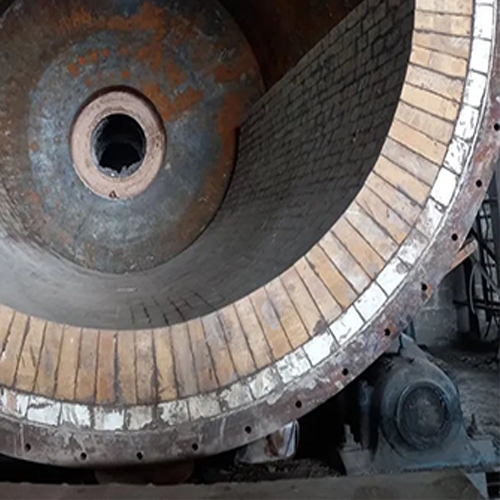
Refractory materials line the furnace and other high-heat areas, and they play several critical roles:
Protecting the boiler casing from overheating and distortion, which could otherwise let combustion gases leak into machinery spaces.
Reducing heat loss and keeping the outer ("cold face") surface at a safe temperature for operating personnel.
Shielding exposed sections of drums and headers from direct flame exposure.
Forming baffles that direct gas flow as part of the boiler's design.
Types of Refractory Material

A refractory has to remain solid at extreme temperatures marine boiler furnaces have recorded temperatures as high as 1650°C.

Firebricks — made from naturally occurring clay containing alumina and silica, with refractory quality largely determined by alumina content. They're pressed to shape and fired at roughly 1475°C.
Insulating bricks — placed between the firebrick and outer casing to bring the surface down to a safe working temperature. Combustible material like sawdust is sometimes mixed into the clay, making them weaker than firebricks but useful for insulation.
Plastic refractory — a compound of fireclay, asbestos, magnesia, and vermiculite, valued for low thermal conductivity.
Chrome-ore-bonded-by-clay — ideal for patching damaged brickwork or lining studded water-wall tubes. It needs to be pounded into place with a mallet to bond properly.
Frequently Asked Questions (FAQ)
How often should a boiler's water side be inspected?
At least twice a year. This is considered the most important maintenance check because it catches hard deposits, corrosion, and circulation issues early, before they cause serious damage.
What causes scale buildup inside a boiler?
Scale usually results from incorrect or insufficient feedwater treatment. Minerals in the water precipitate onto hot surfaces, and insufficient blow-down allows sludge to accumulate in the tubes and at the bottom of the boiler.
Can a boiler be cooled quickly by lifting the safety valves and adding cold water?
No. The boiler should be allowed to cool naturally below 100°C. Rapid cooling from lifting safety valves and refilling with cold feedwater induces thermal stress that can damage the vessel.
What's the difference between fire-side and water-side cleaning?
Fire-side cleaning removes soot and scale from surfaces exposed to combustion gases (tubes, furnace, combustion chamber). Water-side cleaning removes scale, sludge, and corrosion products from the internal water-wetted surfaces, using mechanical, alkaline, or acid methods.
Why was manual tube brushing phased out?
Manual brushing filled boiler rooms with soot and was linked to vanadium poisoning, an illness caused by inhaling airborne vanadium from soot. Toxic effects were recorded at concentrations as low as 5 mg per cubic meter, pushing the industry toward mechanized, vacuum-assisted cleaning systems.
What acid is most commonly used for boiler cleaning?
Hydrochloric acid, typically at concentrations of 2–10%, depending on the severity of scale and corrosion present.
Is tube plugging a permanent fix?
No. Tube plugging is a temporary repair used to keep a boiler operational until dry-dock repairs, such as tube renewal, can be carried out.
What temperature should hot water be for boiler washing?
Around 150°F. Water hotter than this can't be handled safely, while water that's too cold won't clean effectively.
What is refractory used for in a boiler?
Refractory lining protects the boiler casing from overheating and distortion, reduces heat loss, shields drums and headers from direct flame, and can form baffles to direct gas flow.
What should be done immediately after hot-water washing a boiler?
The boiler setting should be dried out right away to prevent moisture damage to the refractory and other components.


