Underwater Archaeology: Discovering Sunken Cities and Shipwrecks


Underwater archaeology unveils chapters of human history long entombed beneath waves. From the remains of ancient ports to majestic vessels claimed by storms, submerged sites offer a unique lens on past societies, technologies, and tragedies. By blending diving expertise with cutting-edge robotics and imaging, researchers chart lost civilizations and carefully extract fragile relics. This blog explores the evolution of underwater archaeology, highlights iconic discoveries, and examines how modern methods safeguard our submerged heritage.

The Evolution of Underwater Exploration
Early forays beneath the surface relied on breath-holding sponge divers and cumbersome hard-hat gear tethered to surface pumps. In the mid-20th century, the invention of self-contained underwater breathing apparatus (SCUBA) by Jacques Cousteau and Émile Gagnan revolutionized access to shallow wrecks and sunken ruins. As diving depths increased, atmospheric diving suits and small submersibles extended reach beyond 100 meters, opening deep-sea sites. This evolution from breath-hold dives to full isolation allowed archaeologists to apply rigorous excavation techniques similar to terrestrial digs, transforming underwater sites into systematic research zones.


Technologies Driving Modern Discoveries
Technological breakthroughs have accelerated underwater investigations and data capture:
● Multibeam Sonar
Swept from survey vessels, this maps seabed topology in fine detail, revealing ship outlines and buried structures.

● Side-Scan Sonar
Provides acoustic imagery to detect anomalies on the ocean floor, guiding researchers to potential wreck sites.

● Remotely Operated Vehicles (ROVs)
Tethered robots equipped with cameras, manipulators, and sampling tools work in depths unsafe for humans.

● Autonomous Underwater Vehicles (AUVs)
Programmed vehicles that survey large areas, collect sonar data, and capture high-resolution photographs.

● 3D Photogrammetry
Combines overlapping photographs into precise three-dimensional models of wrecks and ruins, aiding analysis and virtual tours.

● Submersibles and Manned Missions
Small crewed vessels enable firsthand observation and intricate artifact retrieval in extreme depths.

This toolkit empowers teams to locate, document, and preserve submerged heritage with unprecedented accuracy and speed.
Iconic Shipwreck Discoveries
The romance and tragedy of shipwrecks captivate both scholars and the public. Some of the most celebrated finds include:
● RMS Titanic (1912)
Discovered in 1985 at 3,800 meters by Robert Ballard’s team, Titanic’s ruinous bow and stern offered insights into compartment failures and passenger dynamics.

● Mary Rose (1545)
Henry VIII’s flagship was raised in 1982 from the Solent. An unparalleled cache of Tudor weapons, clothing, and personal items illuminated 16th-century naval life.

● Vasa (1628)
Salvaged in 1961 from Stockholm harbor, the Vasa’s intact hull showcases ornate carvings and early modern shipbuilding techniques.

● USS Monitor (1862)
The Civil War ironclad located off Cape Hatteras in 1973 revealed the beginnings of armored naval warfare.
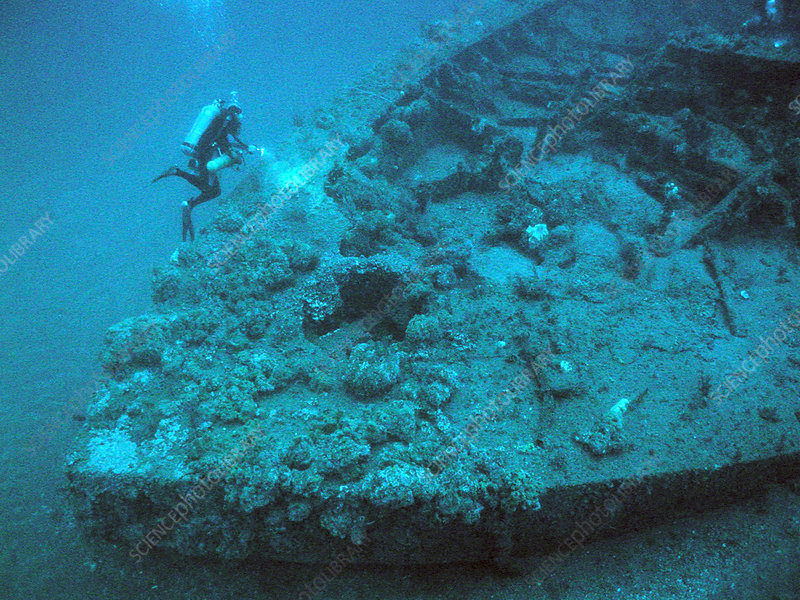
● Spanish Galleons (16th–17th centuries)
Sites off Florida and Mexico have yielded silver coins, pottery, and cargo manifests, mapping trans-Atlantic trade routes.

Each discovery reshapes narratives about ship design, maritime warfare, and the human stories aboard these vessels.
Sunken Cities of Antiquity Beyond individual wrecks, entire urban centers lie submerged, preserved by cold waters or sudden cataclysms: ● Heracleion and Canopus (Egypt)
Once thriving Nile Delta ports, these 1st-millennium BCE cities were rediscovered in the early 2000s. Marble statues, temple columns, and just-departed merchant ships paint a vivid picture of Ptolemaic commerce and religion.

● Pavlopetri (Greece)
Dating back to 2800 BCE, this Minoan-era city features intact street grids, courtyards, and tombs. Multibeam surveys and submersibles mapped its layout, revealing Bronze Age urban planning.

● Dwarka (India)
Mythical home of the god Krishna, submerged ruins off Gujarat’s coast hint at a flourishing port city around 1500 BCE, with stone foundations, docks, and anchors.

● Port Royal (Jamaica)
The 17th-century “wickedest city on earth” sank after a 1692 earthquake. Today, divers explore sunken taverns, houses, and cannon-laden streets preserved in anaerobic mud.

Such sites allow archaeologists to reconstruct daily life, trade networks, and environmental changes that shaped ancient societies.
Methodologies and Challenges Excavating underwater demands specialized protocols to ensure scientific rigor and artifact safety: ● Site Survey and Grid Layout
Initial sonar scans guide the establishment of a grid. Each square is meticulously documented with photographs, sketches, and notes. ● Controlled Excavation
Sediment is removed using water dredges or airlifts, minimizing disturbance. Fragile finds are encased in plaster jackets before ascent to prevent collapse. ● In Situ Conservation
Certain artifacts—organic materials like wood or textiles—may be preserved on site under monitoring rather than lifted, to avoid decay from sudden exposure. ● Legal and Ethical Frameworks
UNESCO’s 2001 Convention on the Protection of the Underwater Cultural Heritage sets guidelines for research, forbids treasure-hunting, and promotes cooperation among nations. ● Interdisciplinary Collaboration
Archaeologists work alongside marine biologists, chemists, and geologists to analyze environmental impacts, corrosion processes, and site formation.
Diving conditions—strong currents, low visibility, and depth limitations—add layers of complexity that demand patience, planning, and innovation.
Conservation and Preservation Once recovered, artifacts face a critical conservation journey: ● Desalination Baths
Objects soaked in freshwater baths for months or years to leach out salt crystals that cause internal cracking. ● Chemical Treatments
Wood is impregnated with polyethylene glycol (PEG) to replace water in cell walls, while metal objects undergo electrolytic reduction to remove chlorides. ● Climate-Controlled Storage
Conserved items reside in carefully controlled humidity and temperature conditions to slow residual degradation. ● Digital Preservation
High-resolution 3D scans create digital twins, enabling virtual exhibitions and ongoing study without risking fragile originals. ● Community Engagement
Museums and local stakeholders collaborate on display narratives, ensuring that recovered heritage respects descendant communities and enriches public understanding.
These efforts transform submerged relics into enduring educational resources.
The Future of Underwater Archaeology Emerging technologies and collaborative approaches promise to push boundaries further: ● Artificial Intelligence
Machine-learning algorithms sift through vast sonar datasets, identifying potential sites faster than manual analysis. ● Swarm Robotics
Fleets of small AUVs working in coordination can map expansive areas concurrently, reducing expedition time. ● Augmented and Virtual Reality
Immersive reconstructions let the public explore sunken cities and wrecks from living rooms, fostering wider appreciation. ● Citizen Science Initiatives
Recreational divers equipped with smartphone apps can log observations, contributing valuable data on shallow-water sites. ● Sustainable Practices
Green propulsion for research vessels and minimal-impact excavation protocols ensure that archaeology leaves ecosystems intact.
As oceans warm and development threatens coastal ruins, these tools will be vital in safeguarding underwater legacies.
Conclusion Underwater archaeology bridges past and present, salvaging stories from silent depths and connecting us to civilizations lost beneath waves. From opulent galleons and imperial liners to submerged metropolises, each site enriches our understanding of human ingenuity, trade, and cultural exchange. By combining meticulous methods, advanced technology, and ethical stewardship, researchers illuminate sunken worlds while preserving them for future generations. Whether you’re a history buff, marine enthusiast, or curious traveler, the next dive into the deep holds wonders waiting to be revealed. Support archaeological initiatives, visit maritime museums, and share these discoveries to ensure that the silent corridors below the sea continue to speak loud and clear.
 |
Cadet Abhilasha Roll Number 9556 DMET Class Of 2026 |
Cadet Abhilasha is a B.Tech Marine Engineering cadet at the Indian Maritime University, Kolkata (Erstwhile DMET), who has gained hands-on experience through internships and workshops at INS Shivaji’s Centre of Excellence, IIT Kharagpur, Garden Reach Shipbuilders and Engineers (GRSE), and DMET, earned top honors in technical paper presentations, creative writing, and elocution competitions, and is also a poet who writes original poetry, aspiring to join the maritime profession as an Engine Cadet dedicated to advancing India’s maritime sector. |


