Lives Lost at Sea: The Human Cost of the Strait of Hormuz Crisis on Indian Seafarers
- DMET Cadets

- 11 minutes ago
- 5 min read

Every Ship Has a Crew. Every Crew Has a Family.
For most people, the Strait of Hormuz is just another name on a world map. For seafarers, it is one of the most critical, and today, one of the most dangerous, shipping lanes on Earth.
Connecting the Persian Gulf to the Gulf of Oman and the Arabian Sea, this narrow waterway carries nearly 20% of global oil consumption and around 20% of the world's liquefied natural gas (LNG) trade. Every disruption in Hormuz affects fuel prices, global supply chains, and international trade. Yet behind these economic headlines lies a story that often goes untold, the story of the merchant seafarers who risk their lives to keep global commerce moving.
India, one of the world's largest suppliers of merchant navy professionals with more than 300,000 certified seafarers, has borne a particularly painful share of this burden. Since the escalation of the Strait of Hormuz crisis in early 2026, several Indian seafarers have lost their lives while serving aboard commercial vessels. They were not soldiers. They carried no weapons. They were engineers, officers, fitters, and cadets performing civilian duties in an increasingly hostile maritime environment.
Their stories remind us that modern geopolitical conflicts can have devastating consequences far beyond the battlefield.
A Growing List of Lives Lost
The crisis has claimed the lives of several Indian merchant seafarers across multiple vessels.
Name | Rank | Vessel | Date |
Captain Ashish Kumar | Master | MT Skylight | 1 March 2026 |
Dalip Singh | Oiler | MT Skylight | 1 March 2026 |
Dixit Amritlal Solanki | Oiler | MT MKD VYOM | 1 March 2026 |
Deonandan Prasad Singh | Additional Chief Engineer | MT Safesea Vishnu | 11 March 2026 |
Patnala Suresh | Chief Engineer | MT Settebello | 10 June 2026 |
Aditya Sharma | Deck Cadet | MT Settebello | 10 June 2026 |
Shivanand Chaurasia | Engine Fitter | MT Settebello | 9–10 June 2026 |
Heramb Karmarkar | Marine Engineer | GFS Galaxy | 12 July 2026 |
Rohan Kumar Gupta | Marine Engineer | MT Al Bayah | 14 July 2026 |
Behind every name is a family whose life changed forever. These men left home expecting to complete another contract at sea; instead, they became victims of a conflict they had no part in creating.
When Merchant Ships Became Targets
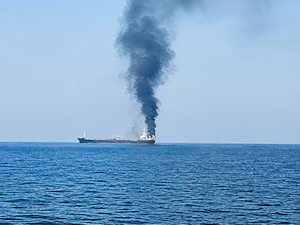
The first major tragedy occurred on 1 March 2026, when the Palau-flagged tanker MT Skylight was struck near Khasab, Oman. Of the twenty crew members onboard, fifteen were Indians. Captain Ashish Kumar and Oiler Dalip Singh were trapped inside the accommodation block as fire engulfed the vessel and could not escape. Around the same time, another Indian seafarer, Dixit Amritlal Solanki, lost his life aboard MT MKD VYOM in a separate attack.
Just days later, the tanker MT Safesea Vishnu was struck off the Iraqi coast near Basra. Additional Chief Engineer Deonandan Prasad Singh was killed, while the remaining crew members were evacuated through coordinated efforts involving the Indian Embassy.
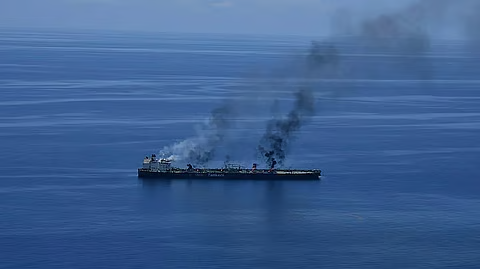
The deadliest single incident for Indian seafarers came in June aboard MT Settebello. Carrying twenty-four Indian crew members, the vessel came under military attack near the coast of Oman. Twenty-one crew members were rescued, but Chief Engineer Patnala Suresh, Deck Cadet Aditya Sharma, and Engine Fitter Shivanand Chaurasia never returned home.
Chief Engineer Suresh had spoken to his wife just days earlier, promising that he would be back before their wedding anniversary. Instead, his family waited for his mortal remains.
By July, attacks had expanded beyond the Strait of Hormuz into the wider Gulf region. Marine Engineers Heramb Karmarkar and Rohan Kumar Gupta were killed aboard GFS Galaxy and MT Al Bayah, demonstrating that the threat to merchant shipping was no longer isolated but persistent.
Beyond the Headlines: The Mental Health Crisis
Fatalities represent only one dimension of this crisis. Thousands of Indian seafarers continue to sail through high-risk waters every day, facing uncertainty that extends far beyond the normal challenges of life at sea.
Traditionally, seafarers contend with long contracts, physical fatigue, harsh weather, and months away from family. The Strait of Hormuz crisis has added a far more unpredictable danger: the possibility of missiles, drones, or military strikes targeting commercial shipping with little or no warning.
This constant uncertainty creates anticipatory anxiety, a psychological state in which individuals remain continuously alert for potential danger. Over time, prolonged exposure to such stress can contribute to insomnia, hypervigilance, anxiety disorders, depression, and symptoms associated with post-traumatic stress disorder (PTSD).
For many survivors, the emotional burden continues long after the incident ends. They often experience survivor's guilt, replay traumatic events, and face the difficult decision of whether to return to sea. Yet for many Indian seafarers, financial obligations leave little choice. Supporting parents, spouses, and children means signing another contract despite the risks.
Families Carry the Invisible Burden

The impact of maritime conflict does not stop at sea.
Every seafarer has a family waiting ashore, parents checking the news every morning, children counting the days until their father's return, and spouses anxiously awaiting satellite phone calls.
When communication is interrupted during a conflict, uncertainty becomes emotionally devastating. Families often receive fragmented information, leaving them to endure days or even weeks without knowing whether their loved one is safe.
This secondary trauma receives little public attention but significantly affects the emotional well-being of both seafarers and their families. Many sailors report that worrying about the stress their families experience becomes an additional psychological burden during already challenging voyages.
India's Response
Recognizing the seriousness of the crisis, the Government of India acted swiftly. The Directorate General of Shipping established a Quick Response Team (QRT) to coordinate assistance, monitor developments, and support Indian seafarers operating in the conflict zone. Indian embassies across the Gulf also played a vital role in facilitating evacuations and providing emergency assistance.
Shipping companies increased security advisories, revised voyage planning, and strengthened communication protocols. Nevertheless, the rapidly evolving nature of the conflict highlighted the need for stronger international coordination to protect civilian merchant vessels operating in conflict-prone waters.
Lessons for the Maritime Industry
The Strait of Hormuz crisis has exposed critical gaps in maritime safety and welfare. It has demonstrated that merchant seafarers, although civilians, can become unintended victims of geopolitical conflicts.
Moving forward, the maritime industry must prioritize:
Comprehensive conflict-zone awareness and emergency response training.
Regular psychological screening and counselling for crews serving in high-risk regions.
Enhanced onboard emergency escape systems and firefighting preparedness.
Improved communication support for families during emergencies.
Greater international cooperation between governments, shipowners, insurers, and welfare organizations to safeguard merchant seafarers.
Equally important is the need for further research into the mental health consequences of prolonged service in conflict zones. Understanding these impacts will help develop evidence-based policies that protect the well-being of the global maritime workforce.
Remembering Those Who Serve
The world often measures maritime crises in terms of oil prices, freight rates, insurance costs, and disrupted supply chains. Seafarers measure them differently.
They measure them through empty cabins, unanswered phone calls, missed family celebrations, and colleagues who never returned from routine voyages.
The Indian seafarers who lost their lives in the Strait of Hormuz crisis did not seek recognition or heroism. They were ordinary professionals performing extraordinary work under increasingly dangerous circumstances. Their sacrifice reminds us that global trade depends not only on ships and ports but also on the courage and resilience of the men and women who operate them.
As geopolitical tensions continue to reshape international shipping, protecting seafarers must become more than an operational priority, it must become a humanitarian responsibility.
Every vessel carries cargo.
Every cargo depends on a crew.
And every crew deserves the assurance that their safety, dignity, and mental well-being are valued as highly as the goods they transport.
Only then can we truly honour the memory of those who sailed into danger and never came home.