India’s Green Shipping Initiatives: Paving the Way for a Sustainable Maritime Future

Updated: Jul 15, 2025

Overview
India, with its 11,098.81 km coastline and over 229 ports, is a maritime powerhouse in global trade. The sector handles 95% of India’s trade by volume and 70% by value, making it central to the country’s economic ambitions. However, the shipping industry also contributes about 3% of global greenhouse gas (GHG) emissions, necessitating urgent interventions to meet international climate commitments. In response, India has launched a comprehensive green shipping agenda, blending policy innovation, technological advancement, and international collaboration. This research-based analysis explores the depth and breadth of India’s green shipping transition as of 2025.

Policy Frameworks and Strategic Roadmaps
Maritime India Vision 2030 and Amrit Kaal Vision 2047
India’s green maritime journey is anchored in two major blueprints: Maritime India Vision 2030 and Amrit Kaal Vision 2047. These documents outline a long-term strategy for sustainable port operations, clean energy adoption, and modernization of shipping infrastructure. The visions emphasize:
Decarbonizing port and shipping operations
Promoting alternative fuels and green shipbuilding
Digitizing logistics and port management
Building global competitiveness through innovation and investment
National Green Shipping Policy (NGSP)
The NGSP sets ambitious targets:
Achieve 500 GW of non-fossil energy capacity by 2030
Reduce one billion tonnes of carbon emissions by 2030
Attain net-zero emissions in the maritime sector by 2070
Key measures include integrating renewable energy in port operations, incentivizing green fuels (LNG, green hydrogen, ammonia, biofuels), and upgrading port infrastructure for green hydrogen production and export.
Major Green Shipping Initiatives
Harit Sagar Green Port Guidelines
Launched to transform major Indian ports into eco-friendly, energy-efficient hubs, these guidelines mandate:
Transition to renewable energy for port operations
Sustainable waste management and water conservation
Use of digital solutions (AI, IoT, blockchain) for efficient logistics
Some ports have already achieved 100% renewable energy use in operations.
Green Tug Transition Programme (GTTP)
This program aims to replace diesel-powered harbor tugs with hybrid and fully electric alternatives. It encourages the adoption of LNG, green hydrogen, and biofuel-powered vessels. Pilot projects are underway at major ports, with a target for 50% green tugs by 2030.
Harit Nauka (Green Vessel) Initiative

Focusing on inland and coastal shipping, this initiative promotes the development and deployment of green vessels, especially small and medium-sized ships, using new technologies and cleaner fuels.
National Green Hydrogen Mission

India’s ambition is to become a global hub for green hydrogen production and export. Key developments include:
Launch of a 1-MW electrolyzer-based green hydrogen plant at Deendayal Port, Kandla, with plans to scale up to 10 MW
Similar projects are being assessed for major ports like VO Chidambaranar, Tamil Nadu
Development of green hydrogen hubs at Kandla, Paradip, and Tuticorin
Target to produce 5 million tonnes of green hydrogen per year by 2030
Green hydrogen and its derivatives (ammonia, methanol) are being piloted in shipping operations, supporting India’s alignment with the International Maritime Organization (IMO) decarbonization targets.
Maritime Development Fund

The recently announced ₹25,000 crore fund is catalyzing investments in green infrastructure, alternative fuels, and fleet modernization. This fund supports research, development, and deployment of green technologies across the shipping and port sectors.
Green Shipping Corridors
India is developing designated shipping routes powered by zero-emission fuels and technologies. The government has signed MoUs with Denmark and Norway, launching a Joint Center of Excellence in Green Shipping, and is conducting feasibility studies for green corridors at Indian ports.
Sustainable Ship Recycling
India leads in sustainable ship recycling, particularly at Alang, adhering to Hong Kong Convention standards for safe and environmentally sound recycling. This program is a global benchmark for responsible ship disposal.
Technological Innovation and Digital Transformation

Green Ship Construction
India is positioning itself as a global hub for sustainable shipbuilding. Initiatives include:
Developing hydrogen and ammonia-ready vessels
Retrofitting existing ships with eco-friendly technologies
Modernizing shipyards with smart solutions
Shipyards like Cochin Shipyard Limited and Hindustan Shipyard Limited are constructing LNG-fueled and hybrid vessels. Government-backed R&D projects in green shipbuilding have increased by 20% over the past five years.
Digitalization
Major digital platforms include:
One Nation-One Port Process (ONOP): Standardized port operations
National Logistics Portal (Marine): Unified digital documentation and cargo tracking
MAITRI Virtual Trade Corridor: Virtually integrates ports, customs, and trade hubs for expedited cross-border trade.
The Digital Centre of Excellence (DCoE), in partnership with CDAC, is developing AI, IoT, and blockchain solutions for sustainable port operations.
International Partnerships and Capacity Building
India’s green shipping strategy is reinforced by global collaborations:
Center of Excellence in Green Shipping: Joint initiative with Denmark for R&D and technology transfer.
Green Shipping Conclave 2025: Hosted in Mumbai, this event brought together policymakers, industry leaders, and technologists to discuss alternative fuels, green ship technologies, and financial mechanisms.
Power-to-X Training: Specialized training programs for Indian maritime professionals on green hydrogen, ammonia, and methanol, supporting the transition to clean fuels and net-zero emissions.
Financial Incentives and Market Development
Shipbuilding Financial Assistance Policy (SBFAP 2.0)
Offers up to 30% assistance for hydrogen, ammonia, methanol, or electric-powered vessels, stimulating investment in green shipbuilding.
Production-Linked Incentives
Targeted at manufacturers of green technology components, these incentives are complemented by tax benefits under the Make in India initiative and specialized economic zones for green maritime manufacturing.
Progress and Achievements (2025)
Initiative/Target | 2030 Goal | 2047 Goal | Current Status (2025) |
Renewable energy share in ports | 60% | 90% | 23% (some ports at 100%) |
Conversion of coastal/inland shipping to renewables | Net zero by 2030 | — | Pilot projects underway |
Green hydrogen production and export | 5 million tonnes | — | Hubs launched at major ports |
Green vessel adoption | — | All vessels green | GTTP & Harit Nauka ongoing |
Challenges and Future Directions
Despite remarkable progress, India faces several challenges:
Infrastructure Gaps: Large-scale green fuel production, storage, and bunkering facilities are still developing
Cost Barriers: High capital costs for new technologies and retrofitting remain a concern for shipowners and investors.
Policy Implementation: Ensuring uniform adoption across major and minor ports and effective monitoring is critical.
Global Competitiveness: Maintaining pace with international standards and investor expectations is essential as India integrates further into global shipping networks.
Conclusion
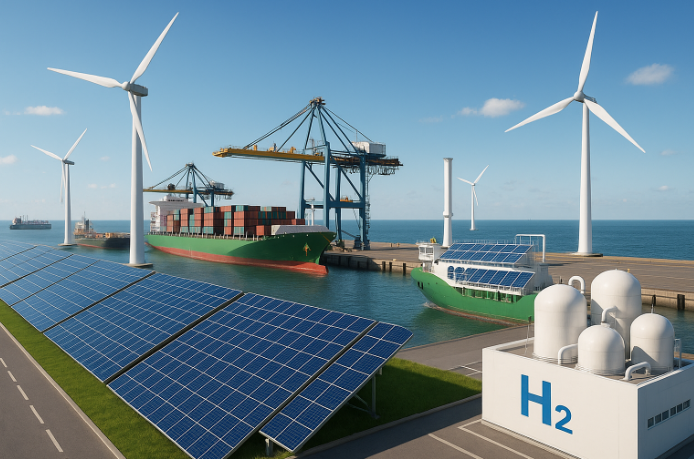
India’s green shipping transformation is marked by robust policy frameworks, strategic investments, technological innovation, and international partnerships. The country’s approach is holistic, integrating renewable energy, fostering innovation in fuels and vessels, and building global alliances. While challenges remain in scaling infrastructure and reducing costs, India’s commitment to maritime sustainability is clear, positioning it as a leader in green shipping among developing economies. The journey is ongoing, but the foundation laid in 2025 ensures that India’s maritime sector will be cleaner, greener, and more resilient in the decades to come.
References
Cadet Kush Rana | Cadet Aditya Singh Rana |
 |  |
Cadet Kush Rana | Cadet Aditya Singh Rana |
Cadet Kush Rana is a Marine Engineering cadet at the Indian Maritime University, Kolkata (Erstwhile DMET). He is the founder of The Marine Times, a maritime news platform, and serves as Associate and Human Resource Head at Vayuweg Makar Motors Private Limited, which is working on India’s first indigenous marine engine. He is also a member of RINA and IMarEST, actively contributing to the maritime engineering field. | Cadet Aditya Singh Rana is a Marine Engineering cadet at the Indian Maritime University, Kolkata (Erstwhile DMET). With a strong academic foundation and a focused interest in the shipping industry, he is committed to becoming a competent marine engineer and contributing to the development of India’s maritime sector. |